

The cyclic ester bond structure within the molecule is highly reactive and readily undergoes ring-opening polymerization. Under suitable catalysts and reaction conditions, the ring structure can open, reacting with other monomers or molecules to form a high-molecular-weight polymer. The properties of the polymerized product are affected by the racemic structure and differ from those of products polymerized with a single configuration of lactide.

Racemic lactide is an equal mixture of L- and D-lactide, with two enantiomers present in the racemic lactide molecule. This structural characteristic causes differences in chemical reactions and physical properties compared to single-configuration lactide, such as different reactivity and selectivity when reacting with chiral reagents.

Racemic lactide is relatively stable and can be stored for a long time when stored dry, away from light, and at low temperatures. However, if stored improperly, such as when exposed to humid air or high temperatures, it may undergo hydrolysis or self-polymerization, affecting its performance and quality.
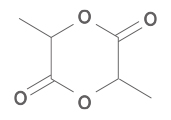
Poly(racemic) lactic acid (PDLLA), formed by the ring-opening polymerization of racemic lactide, exhibits excellent biocompatibility and biodegradability. Sutures made from these materials provide sufficient strength to stabilize wounds during the initial healing phase. Over time, PDLLA is gradually hydrolyzed into lactic acid in the body and ultimately absorbed by the body, eliminating the need for suture removal and reducing patient pain and the risk of infection. Compared to poly(L-lactic acid) (PLLA), PDLLA degrades more rapidly, allowing for selection based on specific clinical needs.
PDLLA and its copolymers can be used to encapsulate drugs into microspheres, nanoparticles, and other carriers. These carriers can control the release rate and duration of drugs based on their properties and therapeutic needs, achieving long-lasting, sustained, and targeted drug delivery, enhancing therapeutic efficacy and minimizing side effects. For example, encapsulating antibiotics in PDLLA microspheres allows for slow release at the site of infection, prolonging their duration of action.
PDLLA, with its suitable pore structure and surface properties, provides an optimal environment for cell adhesion, proliferation, and differentiation. In tissue engineering, it can be used as a scaffold material to repair and regenerate damaged tissues and organs, such as cartilage tissue, nerve tissue, etc. As the tissue grows and repairs, the scaffold material will gradually degrade and eventually be replaced by new tissue.
PLA materials made from racemic lactide offer excellent transparency, barrier properties, and mechanical properties, making them suitable for food packaging. They effectively block the ingress of oxygen, moisture, and odors, extending the shelf life of food. Furthermore, their biodegradability complies with environmental standards, making them an ideal alternative to traditional petroleum-based plastic packaging materials. In some high-end food packaging, PLA can also enhance the environmental profile of the product.
PLA also has broad application prospects in the packaging of daily necessities, such as cosmetics and detergents. Its excellent processability allows for packaging of various shapes and sizes, and its biodegradability helps reduce waste accumulation and environmental pollution.
PLA fibers made from racemic lactide have a soft feel, good moisture absorption, and breathability, making them suitable for use in a variety of textiles. In the apparel industry, PLA fibers can be made into comfortable and environmentally friendly clothing; in the home textile industry, they can be used to make bedding, curtains, and other products. PLA fibers also have natural UV resistance, protecting the skin from harmful UV rays.
95-96-5 | Project Name | Method | Limit |
|---|---|---|---|
DL-lactide | Traits | Visual | White crystalline solid |
| Purity (content) | DSC | ≥99.8% | |
| Moisture | Karl Fischer-Coulomb method | ≤100ppm |
95-96-5 | Project Name | Method | Limit |
|---|---|---|---|
DL-lactide | Acid value | Potentiometric titration | ≤2ppm |
| Total solvent residue (toluene) | Gas chromatography | ≤0.5% | |
| D/L ratio | Polarimeter | 1±0.01 |