
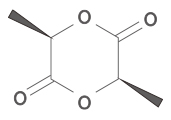
The presence of a cyclic ester bond in the molecule gives it high reactivity. Under suitable catalysts and reaction conditions, it is prone to ring-opening polymerization and can react with other monomers or molecules to form polymers with different properties.

D-lactide has a specific chiral structure and belongs to the right-handed isomer. This chirality endows it with unique chemical and biological properties, showing specificity and selectivity when interacting with other chiral molecules, which is of great significance in drug synthesis and biomedicine.

In a dry, cool, and light-proof environment, D-lactide is relatively stable. However, when exposed to moisture, heat, or light, it may undergo reactions such as hydrolysis and polymerization, causing changes in its chemical properties and performance.
D-lactide can be converted to poly(dextral lactic acid) (PDLA) and its copolymers through ring-opening polymerization. These polymers exhibit excellent biocompatibility and biodegradability, making them suitable for use as drug carriers. They can encapsulate drug molecules, enabling slow release and targeted delivery, improving drug efficacy and reducing toxic side effects.
PDLA and its copolymers can be fabricated into tissue engineering scaffolds with three-dimensional porous structures. These scaffolds provide a suitable environment for cell growth, adhesion, and differentiation, promoting tissue repair and regeneration. In bone tissue engineering, PDLA scaffolds can serve as a support structure for bone cell growth, guiding bone tissue growth and reconstruction, ultimately repairing bone defects.
PDLA can be used to manufacture bioresorbable medical devices, such as sutures and bone fixation devices. After fulfilling their supporting or fixation functions, these devices gradually degrade and absorb in the body, eliminating the need for secondary surgical removal and reducing patient pain and infection risks.
PLA materials made from D-lactide have excellent transparency, barrier properties, and mechanical properties, making them suitable for food packaging. They effectively block the ingress of oxygen, moisture, and odors, extending the shelf life of food. Furthermore, due to its biodegradable nature, it gradually decomposes in the natural environment, reducing environmental pollution and making it an environmentally friendly food packaging material.
PLA materials offer excellent antistatic and cushioning properties for electronic product packaging, protecting them from static damage and mechanical shock. Furthermore, its biodegradability helps address the challenge of electronic waste disposal, aligning with the development of green environmental protection.
Leveraging the chiral properties and excellent optical performance of D-lactide, materials with unique optical properties can be prepared for use in the manufacture of optical lenses. These lenses may offer improved optical clarity, anti-reflective properties, and biocompatibility, and have potential applications in optical devices such as eyeglasses and microscopes.
13076-17-0 | Project Name | Method | Limit |
|---|---|---|---|
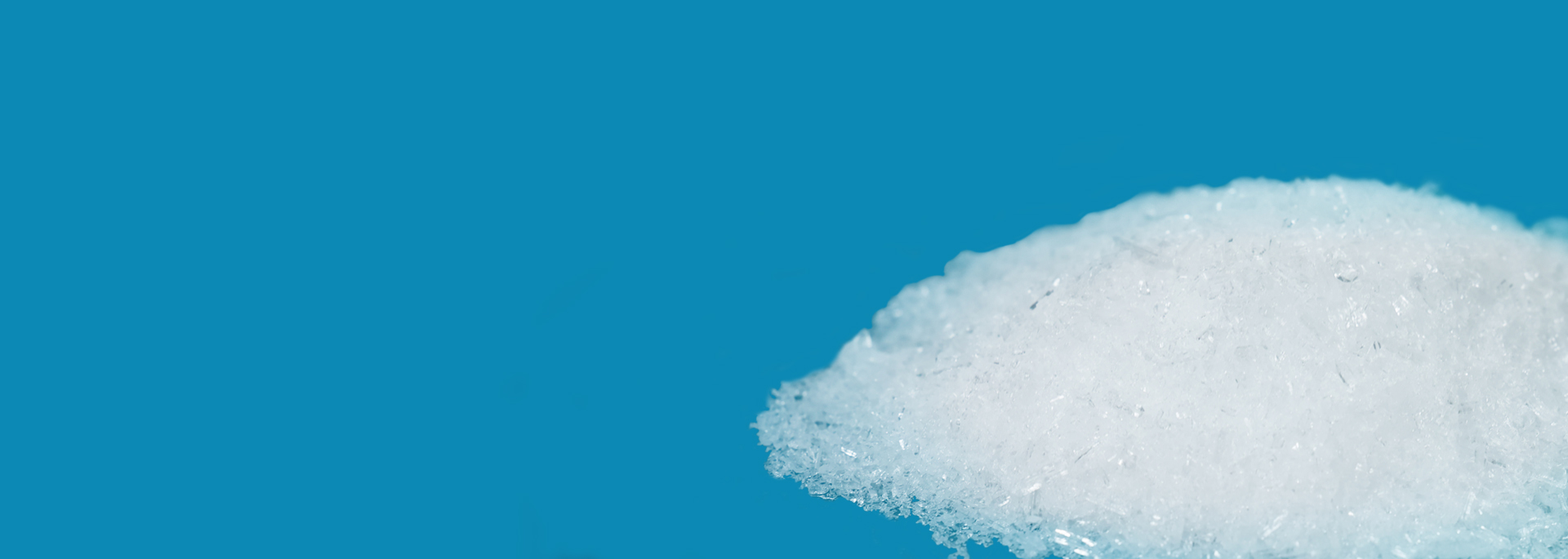
D-lactide | Traits | Visual | White crystalline solid |
| Purity (content) | DSC | ≥99.8% | |
| Moisture | Karl Fischer-Coulomb method | ≤100ppm |
13076-17-0 | Project Name | Method | Limit |
|---|---|---|---|
D-lactide | Acid value | Potentiometric titration | ≤2ppm |
| Optical purity | Polarimeter | ≥99.8% | |
| Total solvent residue (toluene) | Gas chromatography | ≤0.5% |