
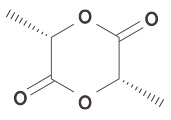
The cyclic ester bond structure in the molecule gives it high reactivity. Under suitable catalysts and reaction conditions, it is easy to undergo ring-opening polymerization, chemically reacting with other monomers or molecules to form polymers or compounds with specific properties.

L-lactide has a unique chiral structure and is a L-isomer. Chirality is one of its key chemical properties, enabling it to exhibit specificity and selectivity when interacting with other chiral molecules. This is of great significance in fields such as drug synthesis and biocatalysis.

It has good chemical stability when stored in a dry, low-temperature and dark environment. However, when exposed to humid environments, high temperatures or light, it may undergo hydrolysis, polymerization and other reactions, resulting in changes in its chemical properties and performance.
Poly-L-lactic acid (PLLA), formed by the polymerization of L-lactide, exhibits excellent biocompatibility and mechanical properties. Sutures made from PLLA provide sufficient strength to hold wounds in place during the initial healing phase. They are then gradually hydrolyzed into lactic acid in the body and ultimately absorbed by the body, eliminating the need for suture removal and reducing pain and infection risk.
PLLA and its copolymers can encapsulate drugs into microspheres, nanoparticles, and other carriers. These carriers can control the rate and duration of drug release based on the drug's properties and therapeutic needs, achieving long-lasting, sustained-release, and targeted delivery, improving drug efficacy and minimizing side effects. For example, in cancer treatment, encapsulating anticancer drugs in PLLA microspheres allows for slow release at the tumor site.
PLLA has a suitable pore structure and surface properties, providing an optimal environment for cell adhesion, proliferation, and differentiation. In tissue engineering, it can be used as a scaffold material to repair and regenerate damaged tissues and organs, such as bone and cartilage. As the tissue grows, the scaffold material gradually degrades and is replaced by new tissue.
Poly-L-lactic acid (PLLA), formed by the polymerization of L-lactide, has excellent transparency, barrier properties, and mechanical properties, making it suitable for food packaging. It effectively blocks oxygen, moisture, and odors, extending the shelf life of food. Its biodegradability meets environmental requirements, making it an ideal alternative to traditional petroleum-based plastic packaging materials.
PLLA has a suitable pore structure and surface properties, providing an optimal environment for cell adhesion, proliferation, and differentiation. In tissue engineering, it can be used as a scaffold material to repair and regenerate damaged tissues and organs, such as bone and cartilage. As the tissue grows, the scaffold material gradually degrades and is replaced by new tissue.
PLLA fibers offer a soft feel, excellent moisture absorption and breathability, and are naturally UV-resistant. They can be used to manufacture high-end textiles and have broad application prospects in sportswear, underwear, and other fields.
PLLA nonwoven fabrics can be used in healthcare, filtration materials, and other fields. In the healthcare field, they can be used to manufacture disposable items such as surgical gowns, masks, and bandages. They are biodegradable after use and pose no environmental risk.
| 4511-42-6 | Project Name | Method | Limit |
|---|---|---|---|
L-lactide | Traits | Visual | White crystalline solid |
| Purity (content) | DSC | ≥99.8% | |
| Moisture | Karl Fischer-Coulomb method | ≤100ppm |
| 4511-42-6 | Project Name | Method | Limit |
|---|---|---|---|
L-lactide | Acid value | Potentiometric titration | ≤2ppm |
Optical purity | Polarimeter | ≥99.8% | |
| Total solvent residue (toluene) | Gas chromatography | ≤0.5% |