

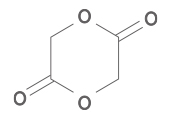
The glycolide molecule contains a cyclic ester bond structure, which makes it highly reactive and prone to ring-opening polymerization. Under suitable catalysts and reaction conditions, the glycolide molecules can open the ring structure and connect with each other to form a high molecular polymer.

Glycolide will undergo hydrolysis under certain conditions, especially in acidic or alkaline environments, where the hydrolysis rate will accelerate and the hydrolysis product is glycolic acid. This property is very critical in the application of biodegradable materials, allowing materials prepared based on glycolide to gradually degrade in the natural environment or in organisms.

Glycolide is relatively stable and can be stored for a long time under dry, light-proof and constant temperature conditions. However, if stored under improper conditions, such as exposure to humid air or high temperature, it may undergo reactions such as self-polymerization or hydrolysis, which may affect its performance and quality.
Polyglycolide (PGA), derived from the polymerization of glycolide, possesses excellent mechanical properties and biocompatibility. Sutures made from it provide sufficient strength to secure wounds during the initial stages of wound healing. Over time, PGA is gradually hydrolyzed into glycolic acid in the body and ultimately absorbed by the body, eliminating the need for suture removal and reducing patient pain and the risk of infection.
Copolymers formed by the polymerization of glycolide with other monomers, such as polyglycolide-lactide (PLGA), can encapsulate drugs into microspheres, nanoparticles, and other carriers. These carriers can control the release rate and duration of drugs based on their properties and therapeutic needs, achieving long-term, sustained, and targeted drug delivery, enhancing therapeutic efficacy and minimizing side effects.
Glycolide-based polymers have a suitable pore structure and surface properties, providing an optimal environment for cell adhesion, proliferation, and differentiation. In tissue engineering, they can be used as scaffolds to repair and regenerate damaged tissues and organs, such as bone and cartilage. As tissue grows and repairs, the scaffold material gradually degrades and is eventually replaced by new tissue.
Biodegradable plastics made from glycolide polymers are environmentally friendly and gradually decompose into carbon dioxide and water under the action of microorganisms in the natural environment. These plastics can be used in packaging, disposable tableware, agricultural mulch, and other fields, potentially addressing the white pollution problem caused by traditional plastics.
Fibers made from glycolide polymers have excellent spinnability and biodegradability, making them suitable for manufacturing environmentally friendly textiles and nonwovens. These fibers naturally degrade after use, reducing the burden on the environment.
Glycolide polymers can be used as raw materials in coatings and adhesives, imparting excellent adhesion, water resistance, and chemical resistance. Glycolide-based coatings and adhesives have broad application prospects in environmentally sensitive industrial applications.
In oilfield production, glycolide polymers can be used as additives such as thickeners and fluid loss control agents. Their excellent water solubility and thickening properties can enhance the performance of drilling and fracturing fluids, helping to improve crude oil recovery efficiency.
| 502-97-6 | Project Name | Method | Limit |
|---|---|---|---|
Glycolide | Traits | Visual | White crystalline solid |
| Purity (content) | DSC | ≥99.8% | |
| Moisture | Karl Fischer-Coulomb method | ≤100ppm |
| 502-97-6 | Project Name | Method | Limit |
|---|---|---|---|
Glycolide | Acid value | Potentiometric titration | ≤2ppm |
Melting point | DSC | 82~87℃ | |
| Heavy metals (expressed as Pb) | ICP-OES | ≤10ppm |