

PLGA is a biodegradable material that degrades primarily through hydrolysis of ester bonds. Within the body or in the natural environment, ester bonds gradually break down, ultimately degrading into lactic acid and glycolic acid. These products participate in the body's metabolic processes and are ultimately excreted as carbon dioxide and water, making them environmentally friendly and non-toxic. The degradation rate can be controlled by adjusting factors such as the ratio of the two monomers, the molecular weight of the polymer, and the morphological structure of the material. Generally speaking, a higher glycolide content results in a faster degradation rate.

In general chemical environments, PLGA has good chemical stability and can withstand the erosion of many common chemical reagents and organic solvents. However, under extreme conditions such as strong acid or alkali or high temperature and humidity, the hydrolysis rate of its ester bonds will accelerate, leading to rapid degradation of the polymer.
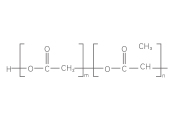
PLGA is one of the most widely used drug carrier materials. It can be formulated into a variety of dosage forms, such as microspheres, nanoparticles, and implants, for encapsulating a wide range of drugs, including small molecules, proteins, peptides, and vaccines. By precisely controlling parameters such as PLGA composition, molecular weight, and particle size, different drug release profiles, such as sustained release and pulsed release, can be achieved, thereby enhancing drug efficacy and minimizing toxic side effects. For example, in cancer treatment, encapsulating chemotherapy drugs in PLGA microspheres allows for targeted delivery and slow release at the tumor site, enhancing tumor cell killing while minimizing damage to normal tissue.
In tissue engineering, PLGA, with its suitable pore structure and excellent surface properties, provides an ideal microenvironment for cell adhesion, proliferation, and differentiation. It can be used as a scaffold material to repair and regenerate damaged tissues and organs, such as bone, cartilage, and nerves. As tissue grows and repairs, the scaffold material gradually degrades and is eventually replaced by newly formed tissue. Advanced technologies such as 3D printing can create PLGA scaffolds with complex three-dimensional structures and precise porosity to better meet the repair needs of different tissues.
PLGA sutures possess excellent biocompatibility and mechanical properties, providing sufficient strength to stabilize wounds during the initial stages of wound healing. Over time, the sutures gradually degrade and absorb, eliminating the need for suture removal and reducing patient pain and infection risk. Compared to single-component polyglycolide or polylactide sutures, the degradation rate of PLGA sutures can be flexibly adjusted to suit the healing time of different tissues, offering greater clinical adaptability.
PLGA has excellent barrier properties, effectively blocking the penetration of oxygen, moisture, and odors, thereby extending the shelf life of food. Its biodegradability makes it an ideal alternative to traditional petroleum-based plastic packaging materials, meeting environmental standards. It can be used to package a variety of foods, such as fresh fruits, vegetables, meat, and dairy products, ensuring food quality and safety while also reducing environmental pollution.
PLGA has shown broad application prospects in packaging applications with high environmental requirements, such as electronics and cosmetics. It can be manufactured into a variety of packaging forms, including films and containers, and gradually degrades in the natural environment after use, reducing waste accumulation and environmental pollution. PLGA also has excellent processability, adapting to packaging needs of various shapes and sizes while enhancing the product's environmental image.
PLGA microspheres or nanoparticles can be encapsulated with natural antimicrobial agents (such as plant extracts and antimicrobial peptides), providing a sustained-release mechanism that prolongs the antimicrobial effect and reduces the use of chemical preservatives.
Due to its excellent thermal processing and molding properties, PLGA is suitable for 3D printing. 3D printing enables the creation of complex, high-precision parts and models, meeting the needs of personalized customization and rapid prototyping. PLGA 3D printing materials have applications in industrial design, medical model manufacturing, aerospace, and other fields.
PLGA can be made into fibers for textile manufacturing. These fibers offer a soft feel, good moisture absorption, breathability, and biodegradability. They can be used in clothing, home textiles, non-woven fabrics, and other products. They have significant potential in the environmentally friendly textile market, particularly for consumers pursuing sustainable development and environmental protection.
PLGA mulch films have a controlled degradation cycle in soil (6-12 months), eliminating the need for recycling after degradation, thus preventing soil compaction and environmental pollution.
| 26780-50-7 | Project Name | Method | Limit |
|---|---|---|---|
Poly(D,L-lactide-co-glycolide) | Traits | Visual | White to yellow solid |
| Moisture | Karl Fischer-Coulomb method | <0.5% | |
| Monomer residue | Gas chromatography | DL-LA≤2% GA≤2% | |
| Tin content | ICP-OES | ≤150ppm |
| 26780-50-7 | Project Name | Method | Limit |
|---|---|---|---|
Poly(D,L-lactide-co-glycolide) | Heavy metals (expressed as Pb) | ICP-OES | ≤10ppm |
| Solvent residues | Gas chromatography | Acetone≤0.1% Toluene≤890ppm | |
| Burnt residue | High temperature burning | ≤0.2% | |
| Intrinsic viscosity | Capillary viscometer | 0.1~4.0dL/g (HFIP25℃,C=0.1g/dL) |