

The glycolide molecule contains a cyclic ester bond structure, which makes it highly reactive and prone to ring-opening polymerization. Under suitable catalysts and reaction conditions, the glycolide molecules can open the ring structure and connect with each other to form a high molecular polymer.

It degrades in vivo or in the natural environment through ester hydrolysis, producing glycolic acid and L-lactic acid, which participate in human metabolism and are ultimately excreted as carbon dioxide and water. This is environmentally friendly and non-toxic. The degradation rate can be controlled by adjusting the monomer ratio, molecular weight, and material form; higher glycolide content results in faster degradation.

It has good chemical stability at room temperature and neutral environment and can withstand common chemical reagents and organic solvents. However, under strong acid, strong alkali or high temperature and high humidity conditions, the hydrolysis of ester bonds is accelerated, leading to faster degradation of the polymer.
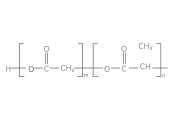
These are commonly used drug carrier materials and can be made into microspheres, nanoparticles, and implants to encapsulate drugs such as antibiotics, anticancer drugs, and vaccines. By controlling the composition, molecular weight, and particle size of PLLGA, slow and sustained drug release can be achieved, improving efficacy and reducing toxic side effects. For example, encapsulating anticancer drugs allows for targeted, sustained release at the tumor site, enhancing tumor cell destruction.
They possess a suitable pore structure and surface properties, providing an optimal environment for cell adhesion, proliferation, and differentiation. They are used in tissue engineering to repair and regenerate damaged tissues and organs, such as bone, cartilage, and nerves. As tissue grows, the scaffold gradually degrades and is replaced by new tissue.
The resulting sutures have excellent biocompatibility and mechanical properties, providing sufficient strength during wound healing and then gradually degrading and resorbing, eliminating the need for suture removal and reducing patient pain and infection risk. The degradation rate can also be adjusted to accommodate the healing time of different tissues.
It has excellent barrier properties, blocking oxygen, moisture, and odors, extending the shelf life of food. Its biodegradability makes it an ideal alternative to traditional petroleum-based plastic packaging, meeting environmental standards and suitable for packaging a wide range of foods.
It has broad application prospects in environmentally sensitive packaging applications such as electronics and cosmetics. When manufactured into films, containers, and other packaging forms, it naturally degrades after use, reducing environmental pollution.
They offer excellent thermal processing and forming properties, making them suitable for 3D printing. 3D printing can be used to create complex parts and models, meeting the needs of personalized customization and rapid prototyping. They are used in industrial design, medical model manufacturing, and other fields.
The resulting fibers are soft to the touch, have good moisture absorption and breathability, and are biodegradable. They can be used in clothing, home textiles, non-woven fabrics, and other products, and have potential for development in the environmentally friendly textile sector.
| 30846-39-0 | Project Name | Method | Limit |
|---|---|---|---|
| Poly(L-lactide-co-glycolide) | Traits | Visual | White crystalline solid |
| Moisture | Karl Fischer-Coulomb method | <0.5% | |
| Monomer residue | Gas chromatography | L-LA≤2% GA≤2% | |
| Tin content | ICP-OES | ≤150ppm |
| 30846-39-0 | Project Name | Method | Limit |
|---|---|---|---|
| Poly(L-lactide-co-glycolide) | Heavy metals (expressed as Pb) | ICP-OES | ≤10ppm |
| Solvent residues | Gas chromatography | Acetone≤0.1% Toluene≤890ppm | |
| Burnt residue | High temperature burning | ≤0.2% | |
| Intrinsic viscosity | Capillary viscometer | 0.1~4.0dL/g (HFIP25℃,C=0.1g/dL) |