

The ester bond on the molecular chain gives it a certain degree of reactivity, which allows it to react chemically with substances containing active groups (such as amines and alcohols), making it easy to carry out chemical modification to meet different application requirements.

PGA gradually degrades in vivo or in the natural environment through hydrolysis of ester bonds. The degradation product is glycolic acid, which participates in normal human metabolism and is ultimately converted into carbon dioxide and water for excretion. It is environmentally friendly and has no toxic residues.
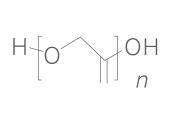
PGA is one of the earliest materials used in the manufacture of absorbable sutures. Its high strength and biocompatibility provide reliable support during the initial stages of wound healing, followed by gradual degradation and absorption, eliminating the need for suture removal and reducing patient pain and infection risk. It is commonly used for tissue suturing in general surgery, obstetrics and gynecology, orthopedics, and other surgical procedures.
Drugs can be encapsulated in microspheres, nanoparticles, and other dosage forms. By controlling the degradation rate of PGA, slow and sustained drug release can be achieved, improving efficacy and reducing toxic side effects. For example, in cancer treatment, encapsulating anticancer drugs allows for targeted delivery and sustained release at the tumor site.
PGA has a suitable pore structure and surface properties, providing an ideal environment for cell adhesion, proliferation, and differentiation. In tissue engineering, it is used as a scaffold material for the repair and regeneration of tissues such as bone, cartilage, and nerves. As the tissue grows, the scaffold gradually degrades and is replaced by new tissue.
Due to its biodegradability, PGA can replace traditional petroleum-based plastics in the manufacture of disposable tableware, food packaging, shopping bags, etc. After use, it gradually degrades in the natural environment, reducing white pollution.
In agriculture, PGA mulch can retain soil moisture, increase ground temperature, and promote crop growth. It degrades naturally in the soil after use, avoiding the damage to soil structure and the environment caused by traditional mulch residues.
PGA fibers have high strength and modulus, making them suitable for use as reinforcement in composite materials. When combined with a resin matrix, they significantly enhance the mechanical properties of composite materials, making them widely used in the manufacture of structural components in aerospace, automotive, and marine applications.
| 26124-68-5 | Project Name | Method | Limit |
|---|---|---|---|
Polyglycolide | Traits | visual | Solid substance that changes from yellow to dark brown |
Melting point | DSC | 220~240℃ | |
Melt Flow Rate (MFR) | Melt flow rate meter | 10~20g/min | |
| pH | pH meter | >6.5 | |
| Moisture | Karl Fischer-Coulomb method | ≤100ppm | |
Burnt residue | High temperature burning | ≤0.2% |
| 26124-68-5 | Project Name | Method | Limit |
|---|---|---|---|
Polyglycolide | Monomer residue | Gas chromatography | ≤1% |
Tin content | ICP-OES | ≤150ppm | |
Heavy metals (expressed as Pb) | ICP-OES | ≤10ppm | |
| Total residual solvent (toluene) | Gas chromatography | <5ppm | |
| Intrinsic viscosity | Capillary viscometer | 0.8~1.5dL/g (HFIP25℃,C=0.1g/dL) | |